What we do

See all services → Shopify Plus Partner
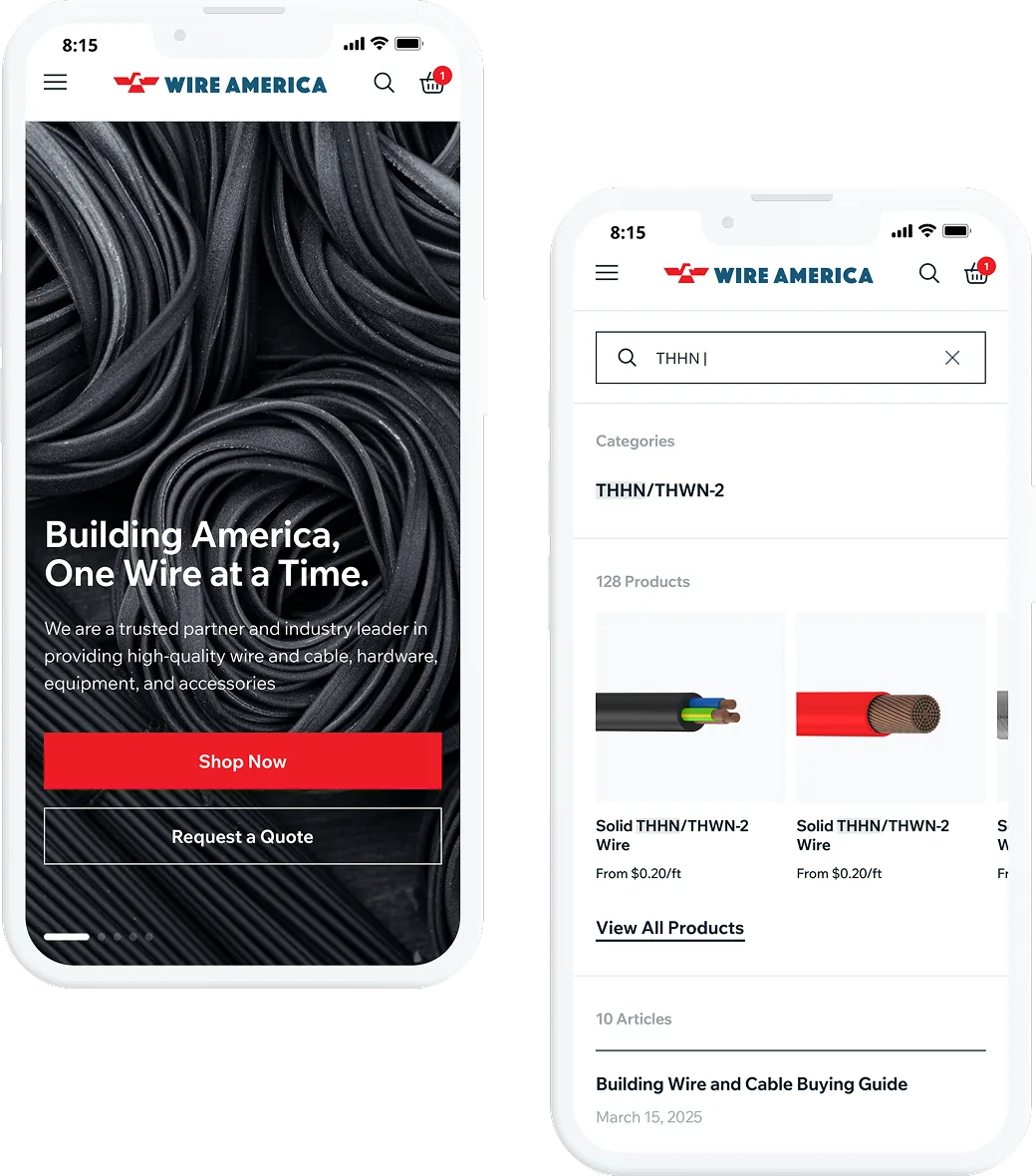
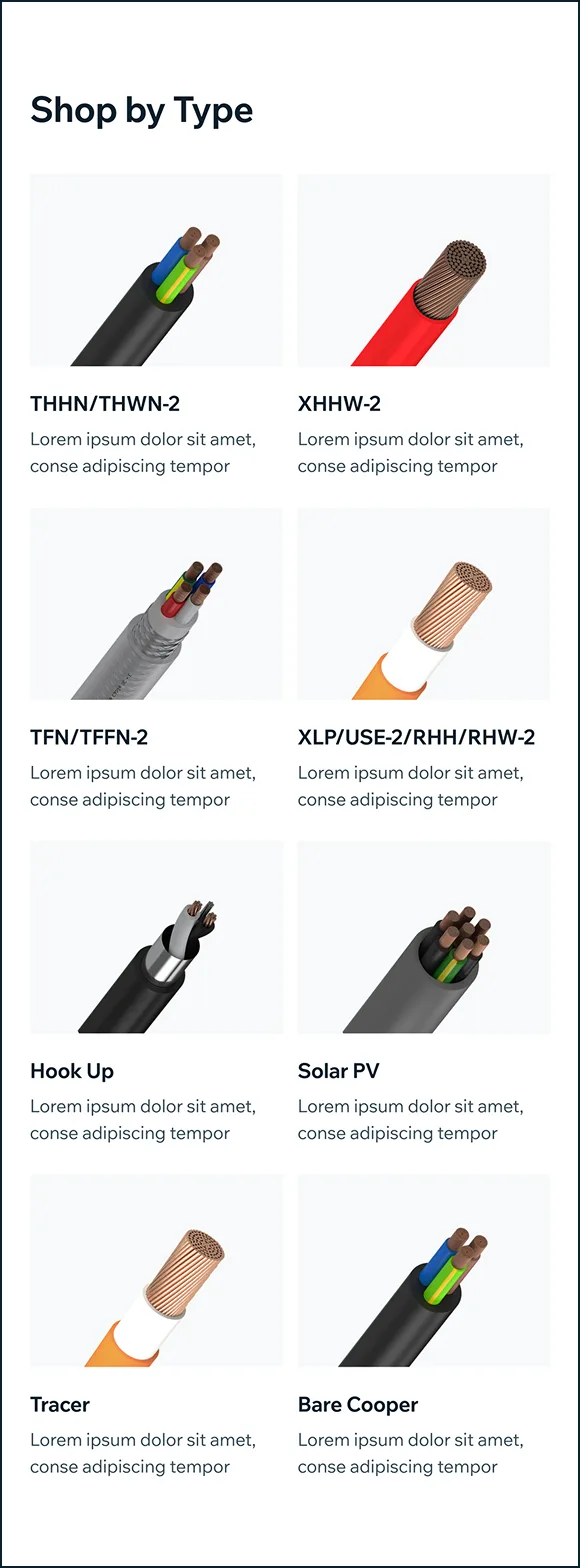
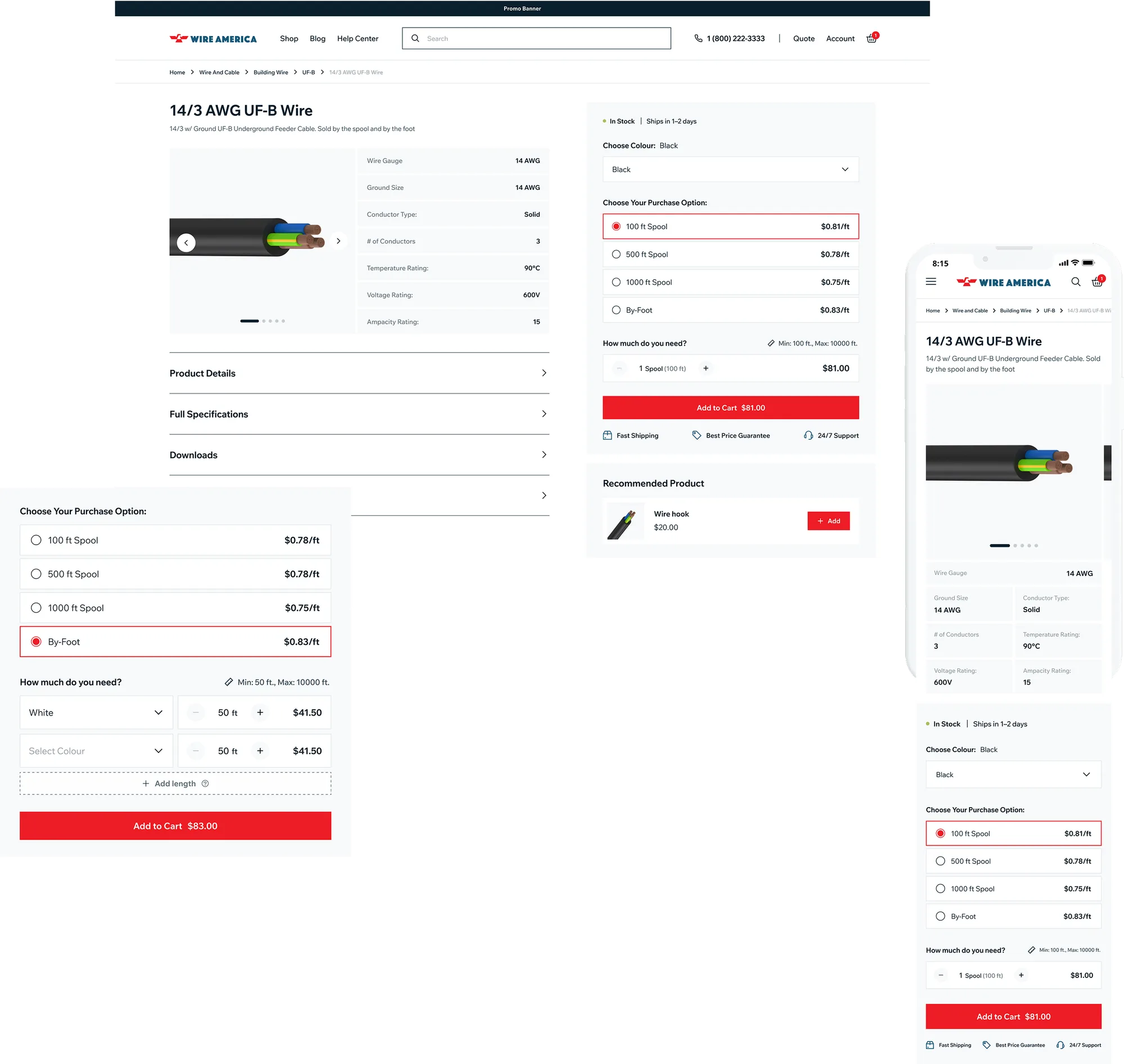
Many of WireAmerica's customers are contractors shopping on job sites - phone in hand, needing to find the right wire, confirm stock, and check out fast.
The entire platform was built mobile-first, with prominent category filters, thumb-friendly product selectors, and a streamlined cart designed to minimise friction even on small screens. Every page was tested across Chrome, Safari, and Firefox to ensure consistent performance for the tradespeople who needed it most.
Product Page
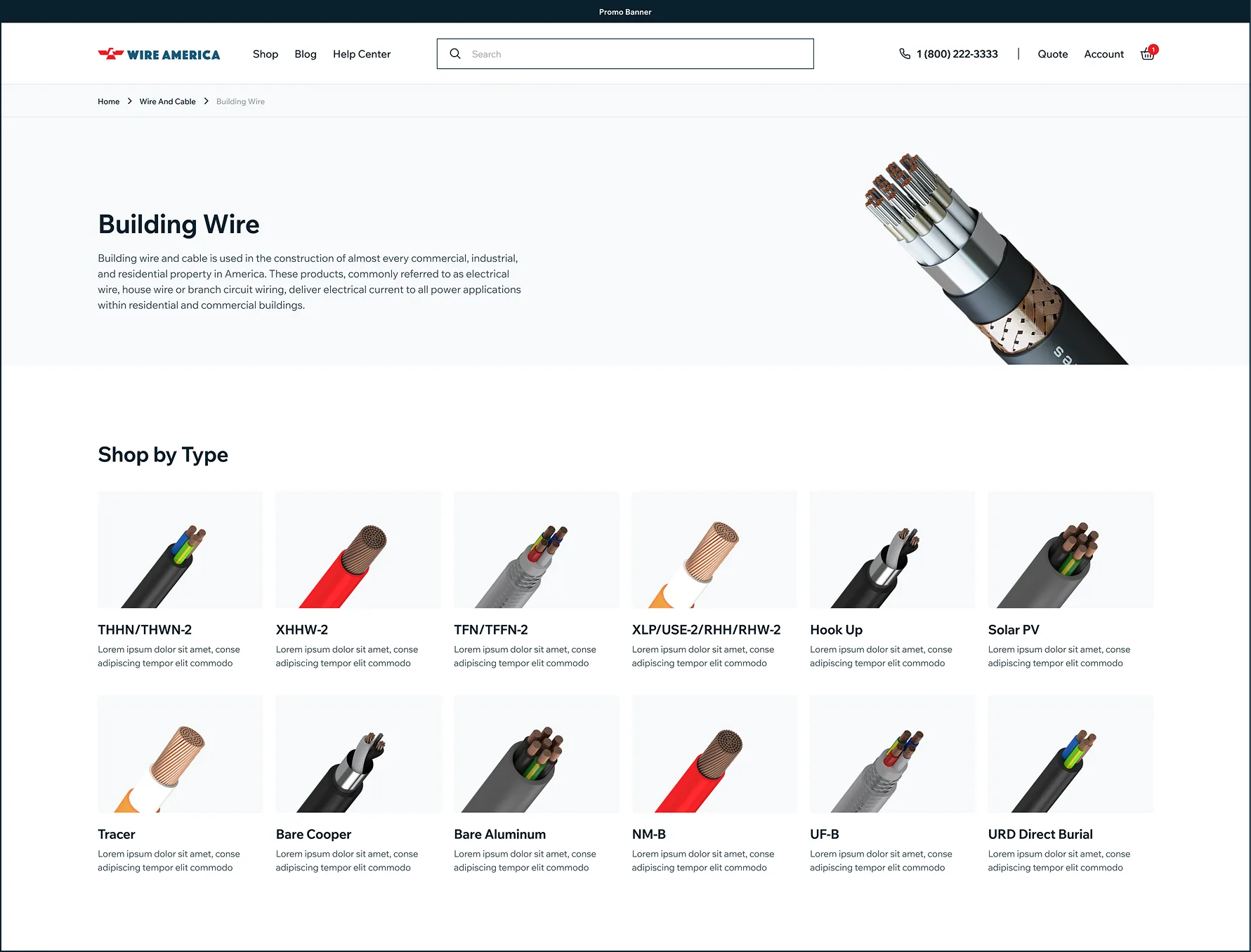
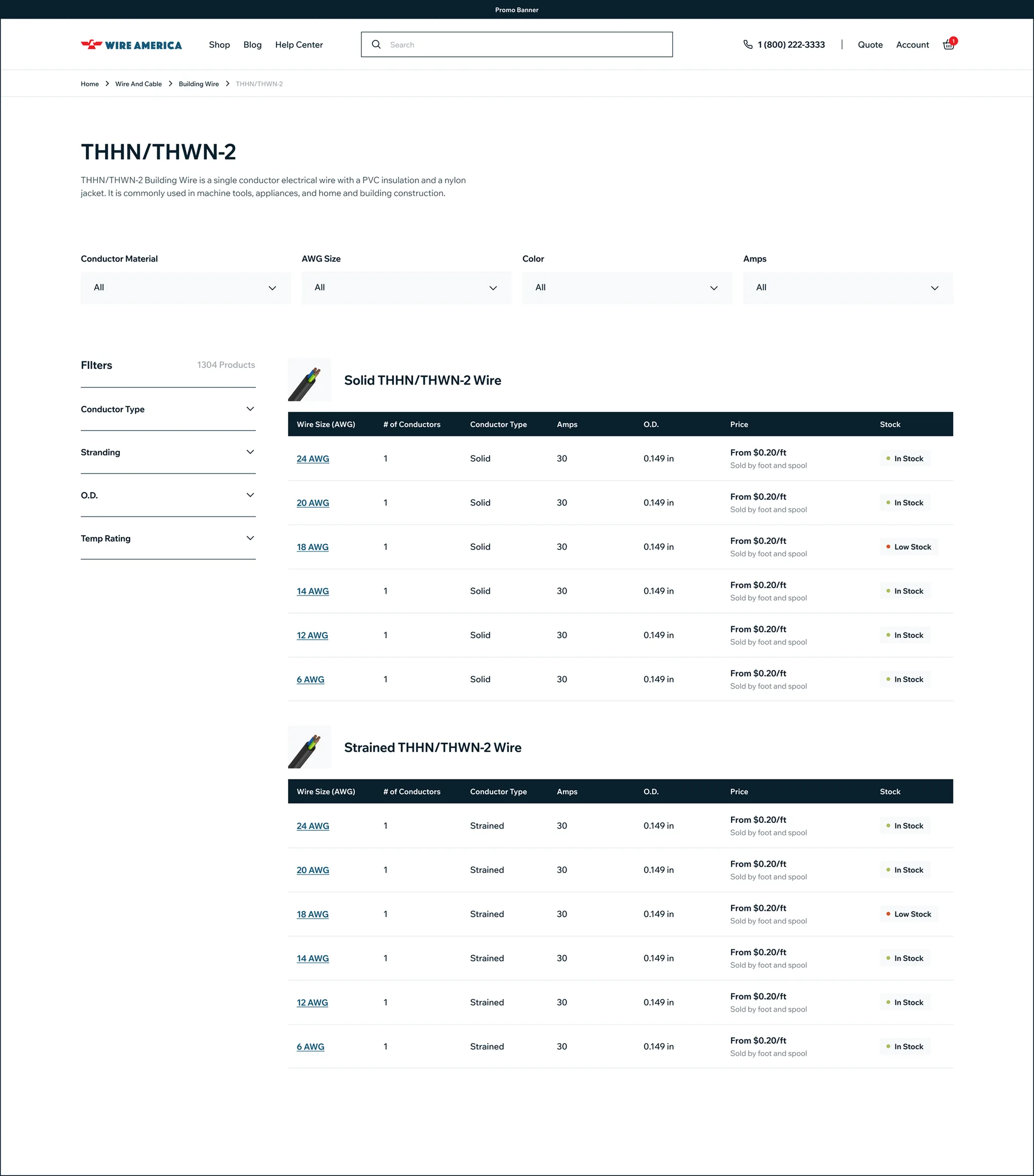
Collection pages needed to handle one of the most complex filtering challenges in Shopify: surfacing the right wire from a catalog of thousands using attributes like AWG gauge, conductor type, colour, indoor/outdoor rating, and voltage class.
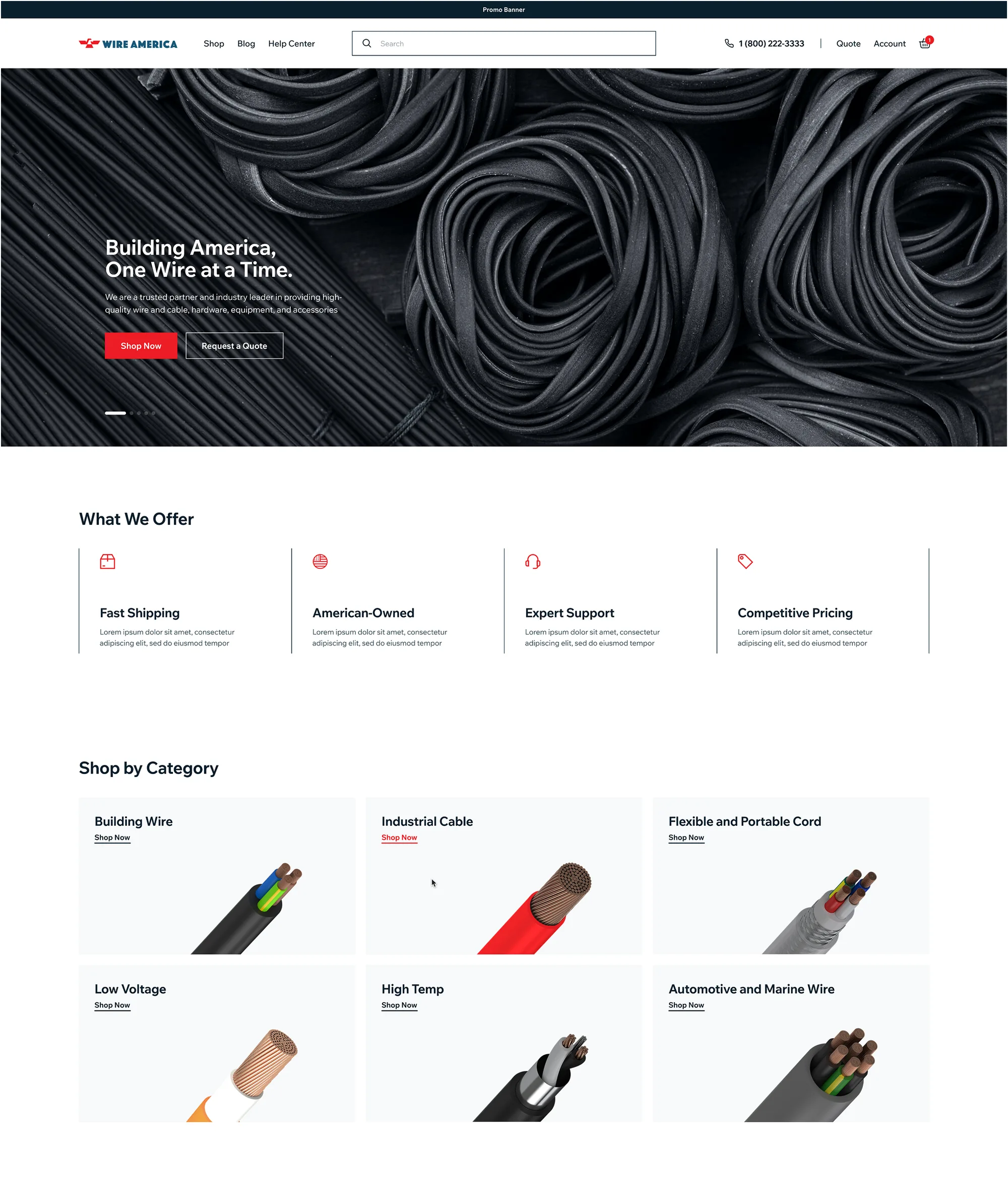
Makro integrated Algolia to power real-time faceted filtering across all major categories: Building Wire, Flexible & Portable Cord, Automotive & Marine, Industrial Cable, and Low Voltage.
Customers who know exactly what they want can filter to a match in seconds; those who don't are guided by inline educational labels and category descriptions.
Product Page
One of WireAmerica's biggest operational pain points was fielding manual quote requests from government buyers and large contractors.
Makro built a cart-to-quote flow that allows any order to be escalated into a formal quote request: capturing line items, quantities, and customer details. Eliminating back-and-forth emails.
The cart also handled split shipment logic for orders fulfilled from multiple vendor locations, and a freight escalation trigger that routes orders over 110lbs to an LTL freight quote rather than standard checkout.
checkout
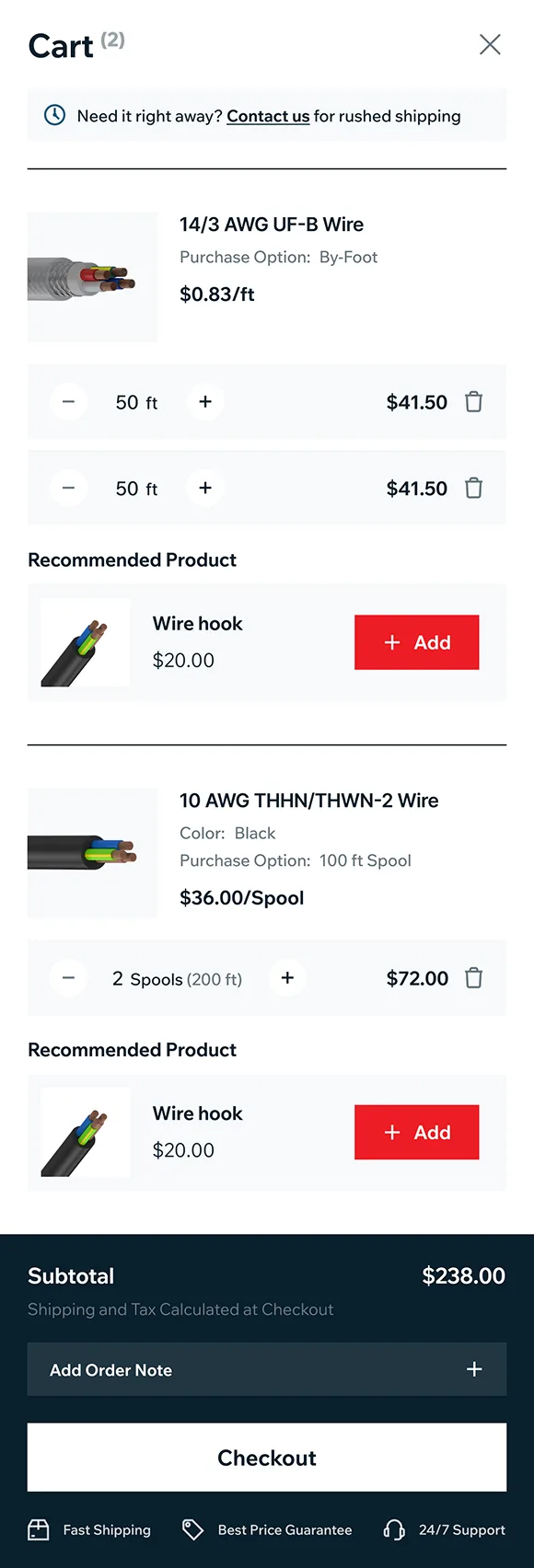
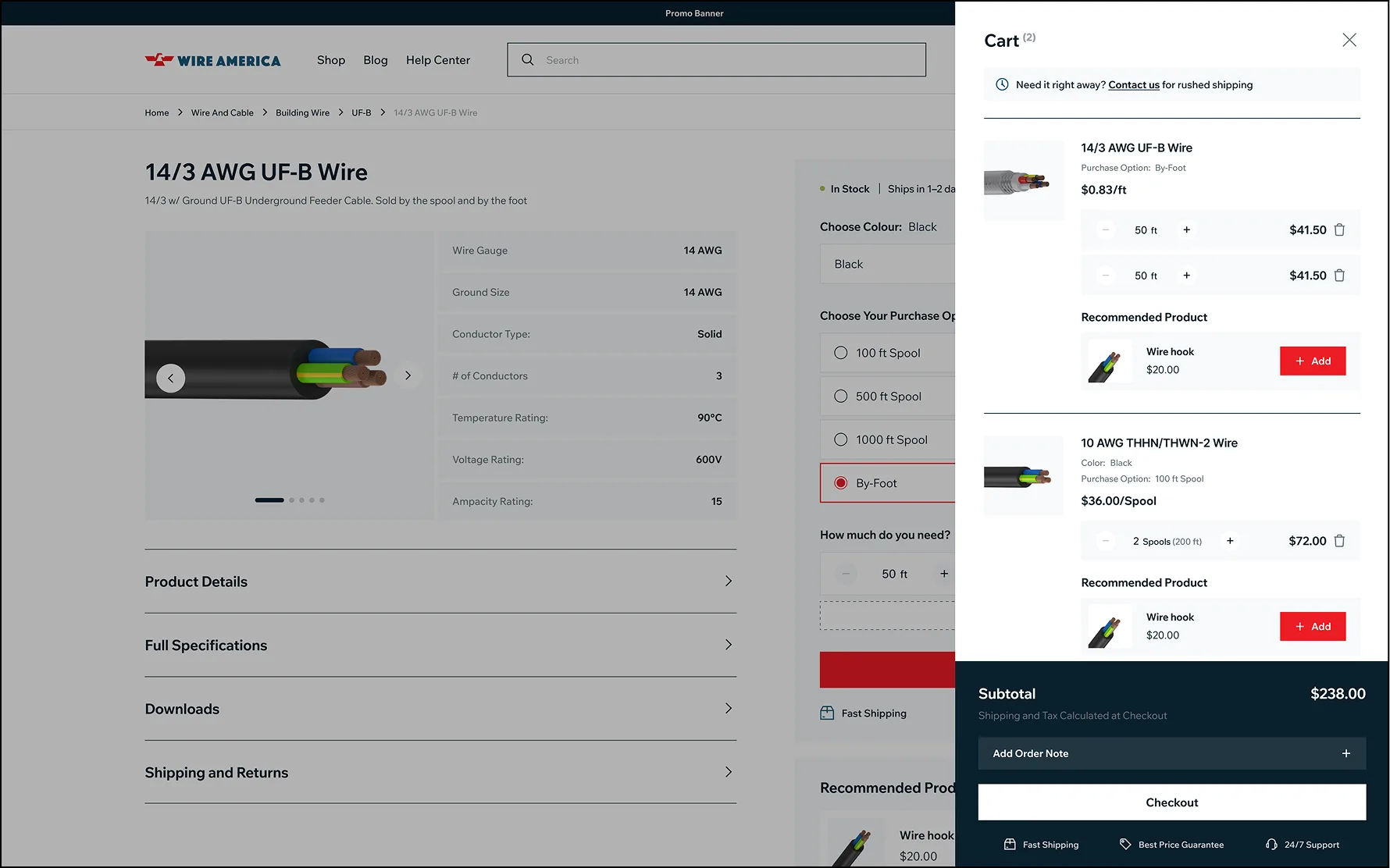
The wire and cable industry has a purchasing reality that general e-commerce does not. A single cart may contain products from three different vendors, shipping from two different warehouse locations, with one item made to order and another requiring freight rather than parcel delivery. Standard checkout flows collapse under these conditions. Makro engineered a checkout that treats this complexity not as an exception, but as the expected state.
The checkout had to reflect how wire and cable is actually bought, not how a platform assumes it is.
The foundation of the WireAmerica checkout was a clear separation of concerns. Each item in a customer's cart carries attributes that determine not just its price, but its fulfilment path, shipping method, and tax treatment. The checkout reads these attributes and responds accordingly, presenting the customer with a purchase flow that is accurate to their specific order, not a generic approximation of it.