
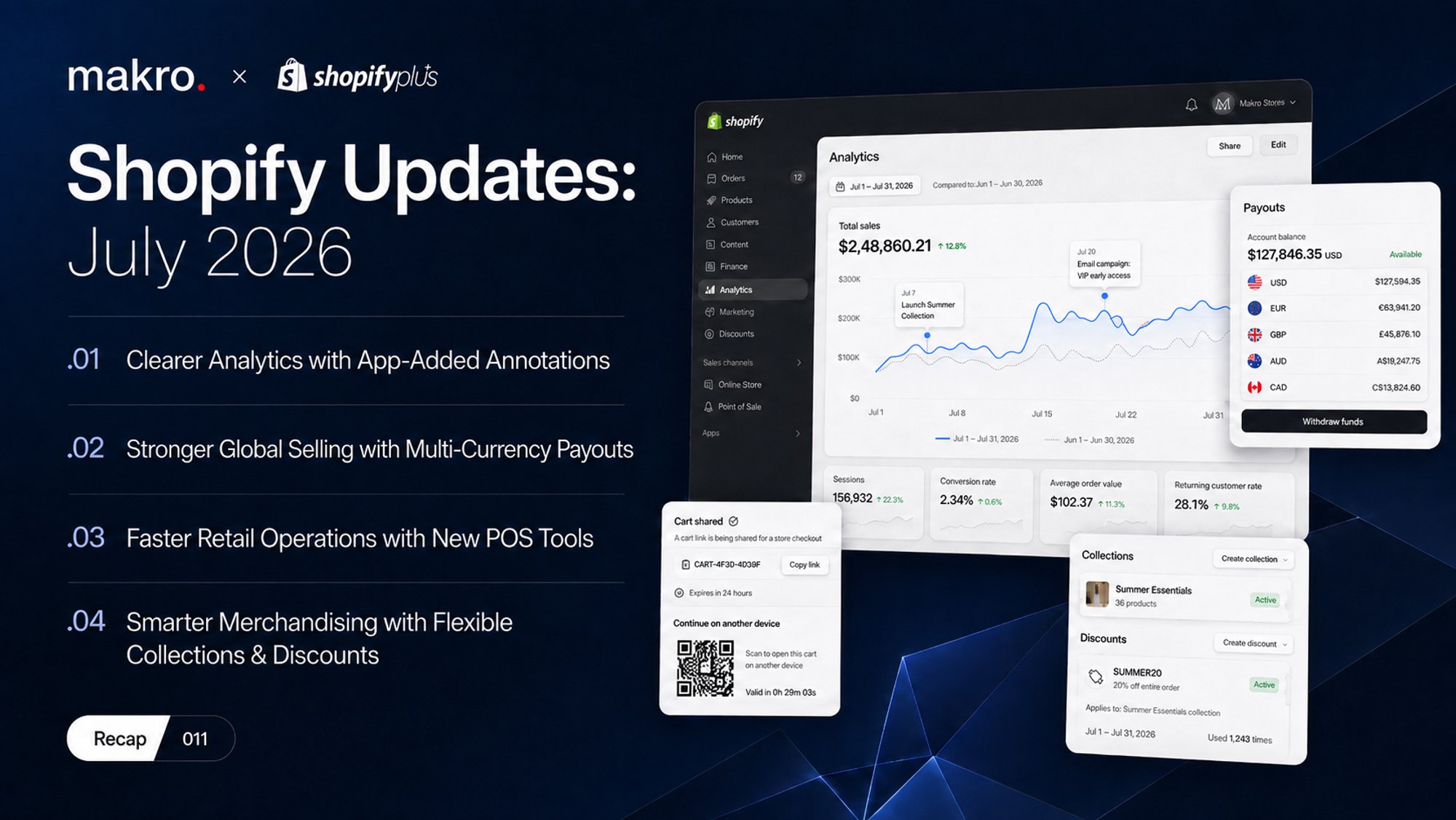
Shopify released 17 updates in July across checkout, international selling, POS, merchandising, marketing, analytics and store operations. Learn more.
Makro’s Monthly Shopify Recap: July 2026 Updates
Shopify released 17 updates in July across checkout, international selling, POS, merchandising, marketing, analytics and store operations. Rather than treating each release as a separate announcement, we grouped them by the part of the commerce experience they improve.
Here is what growing and enterprise merchants should know.
What’s new in checkout and international selling?
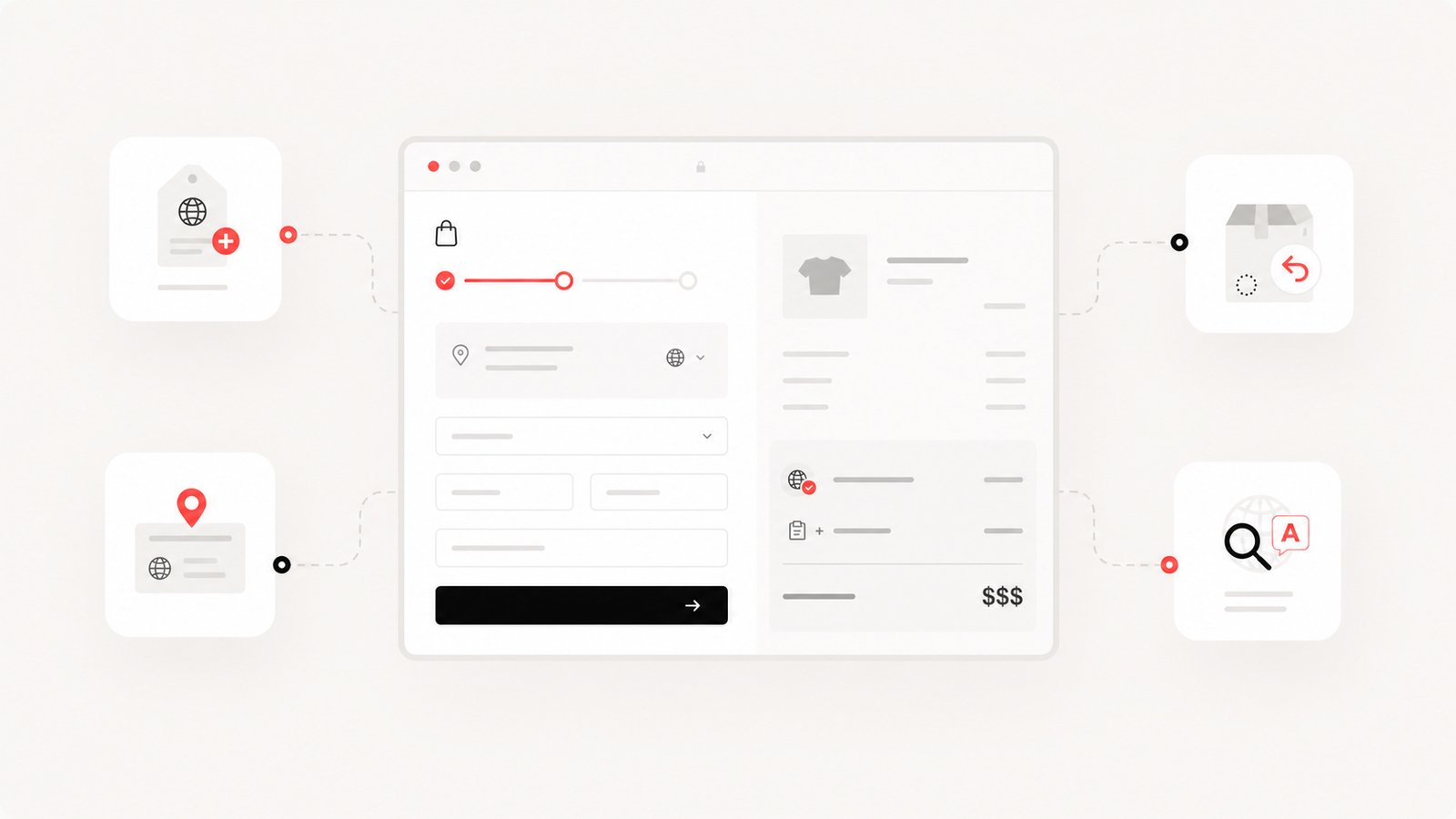
Shopify introduced several changes intended to make international purchases clearer and easier to complete.
Managed Markets merchants can now include duties, import taxes and cross-border fees directly in product prices. This gives international buyers a better idea of the full cost before reaching the final stages of checkout, rather than discovering additional charges after placing an order.
Shopify also added localized address fields for Brazil, the Philippines, Kuwait, Peru and Panama, alongside support for Brazil’s new alphanumeric CNPJ format. These changes may appear small, but more accurate address and identification fields can reduce failed deliveries, validation errors and unnecessary support requests.
For applicable European Union orders, Managed Markets now supports buyer-initiated cancellation and return requests. Merchants can also control automatic hreflang tags directly from Shopify Admin instead of contacting Support.
The bigger opportunity is to review these features together. International checkout, pricing, localization, search visibility, returns and fulfillment are connected. Changing one setting without considering the others can simply move friction further along the customer journey.
What’s new in payments and financial management?
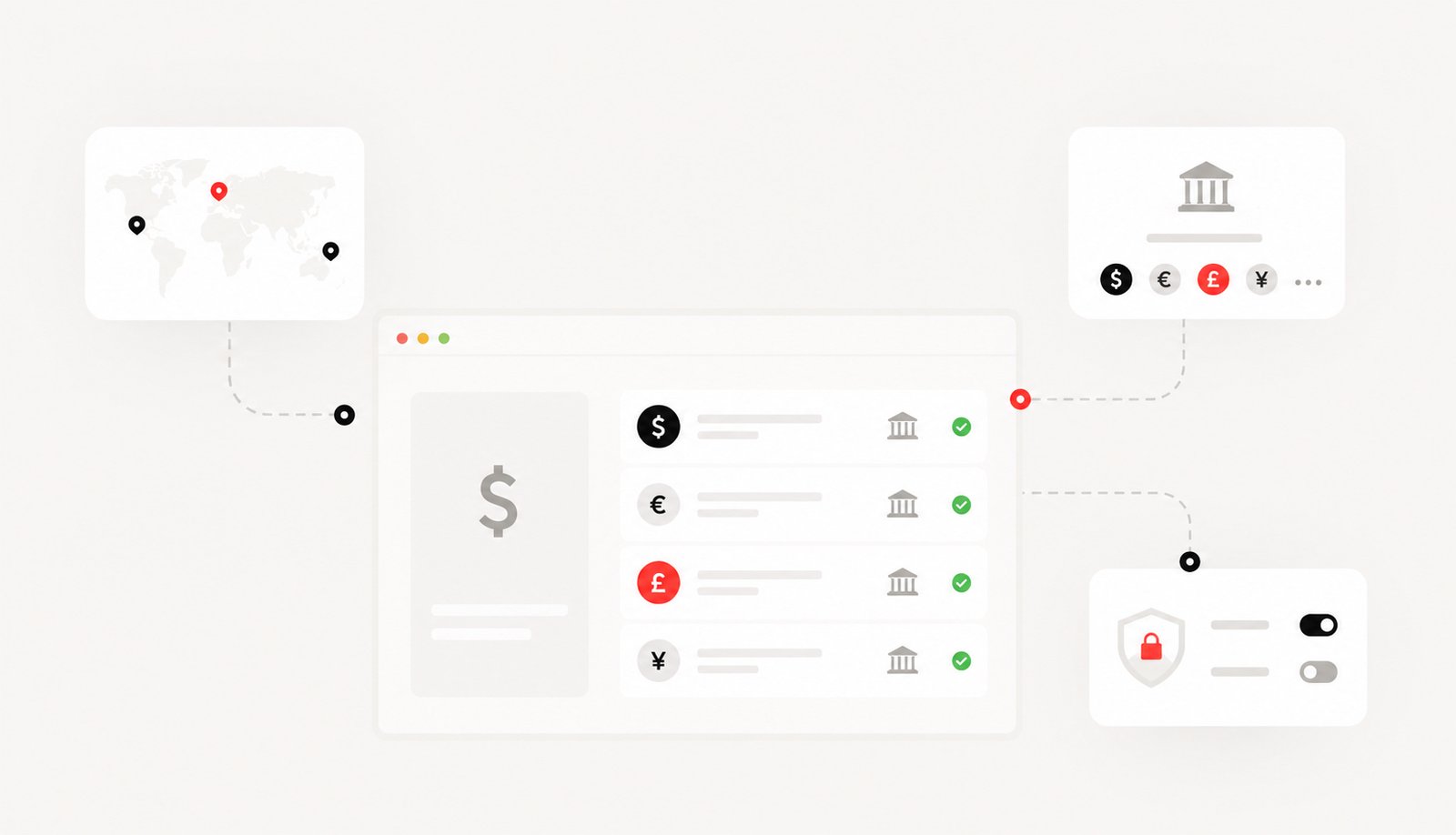
Shopify removed the previous eight-currency limit for multi-currency payouts.
Eligible merchants can now add a bank account for every supported payout currency, allowing them to receive more of their revenue in the currencies in which they sell.
For businesses with international suppliers, regional teams or expenses in multiple currencies, this may help reduce unnecessary conversions and provide more control over cash flow.
Shopify also introduced more specific staff permissions for managing payment settings, disputes, payouts and tax documents.
The payout update should not be treated as a quick administrative change. Finance teams should first confirm how additional currencies will flow into accounting, tax reporting, banking and ERP systems. More flexibility inside Shopify is only useful when the surrounding financial systems can support it.
What’s new for retail and Shopify POS?
July brought three practical updates for merchants operating physical retail locations.
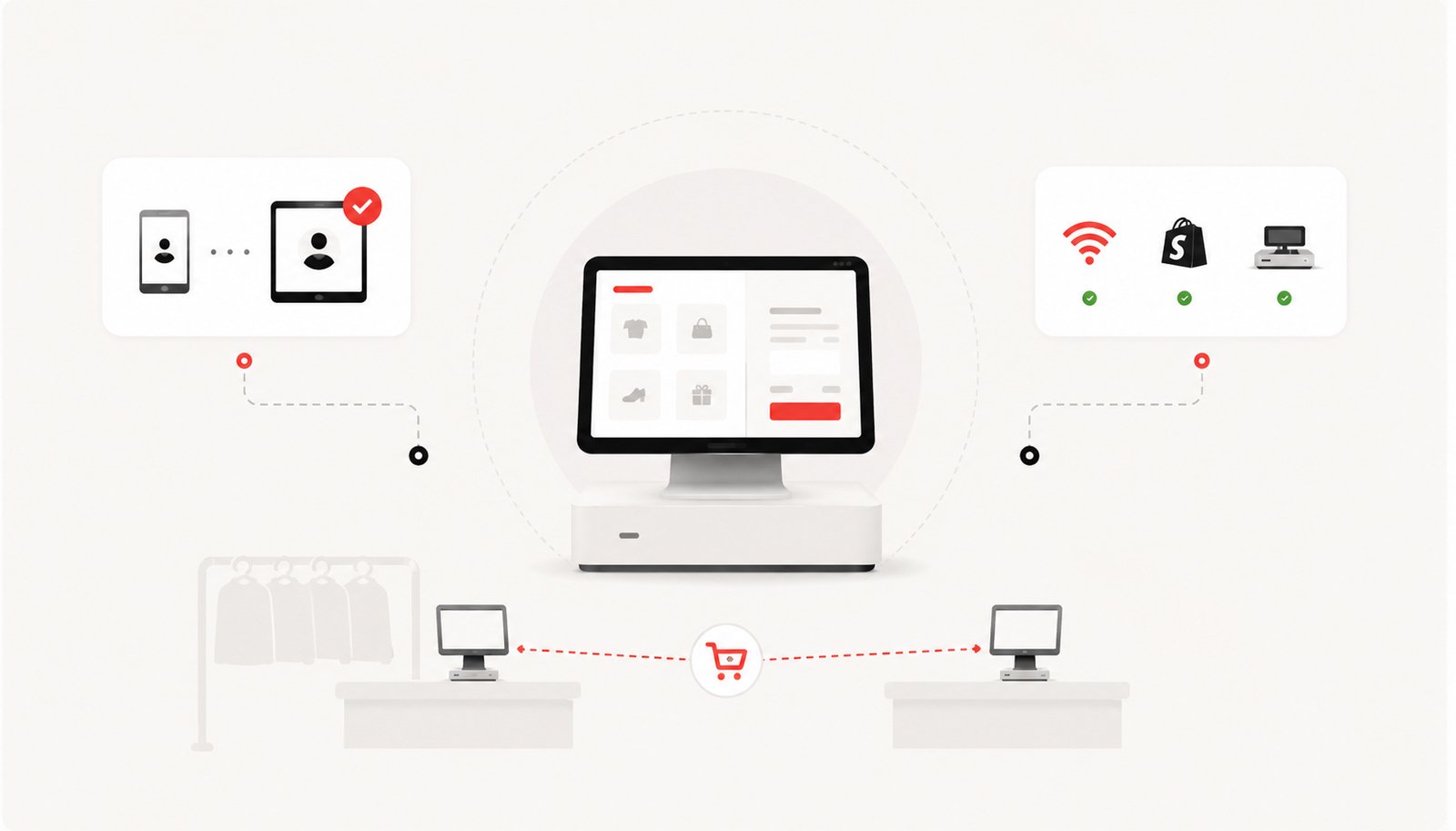
Staff can now approve a login on a new POS device from another nearby device that is already signed in. They can also build a cart on one POS device and share it with another employee or checkout station.
Shopify has also updated its POS connectivity screen to show the health of the internet connection, Shopify services and connected hardware, with clearer guidance when a feature cannot operate offline.
Together, these changes can make it easier to set up new devices, move customers between associates and troubleshoot checkout interruptions.
Before rolling out cart sharing across multiple locations, merchants should test how customer profiles, discounts, inventory, commissions and staff attribution behave when a cart changes hands.
What’s new in merchandising and promotions?
Collections can now be created from multiple product groups, narrowed to specific variants and reused across different areas of the storefront.
This gives merchants more control when building seasonal assortments, campaign landing pages, clearance collections or market-specific product groups.
Shopify also now allows multiple product discounts to apply to the same qualifying item. That creates more flexibility for combining loyalty incentives, seasonal sales and customer-specific promotions.
Both updates are useful, but they can also expose weaknesses in an existing product catalogue or promotional structure.
Variant-level collections still depend on accurate product data, naming, filters and navigation. Discount combinations should be tested against B2B pricing, subscriptions, returns, draft orders and margin requirements before launch.
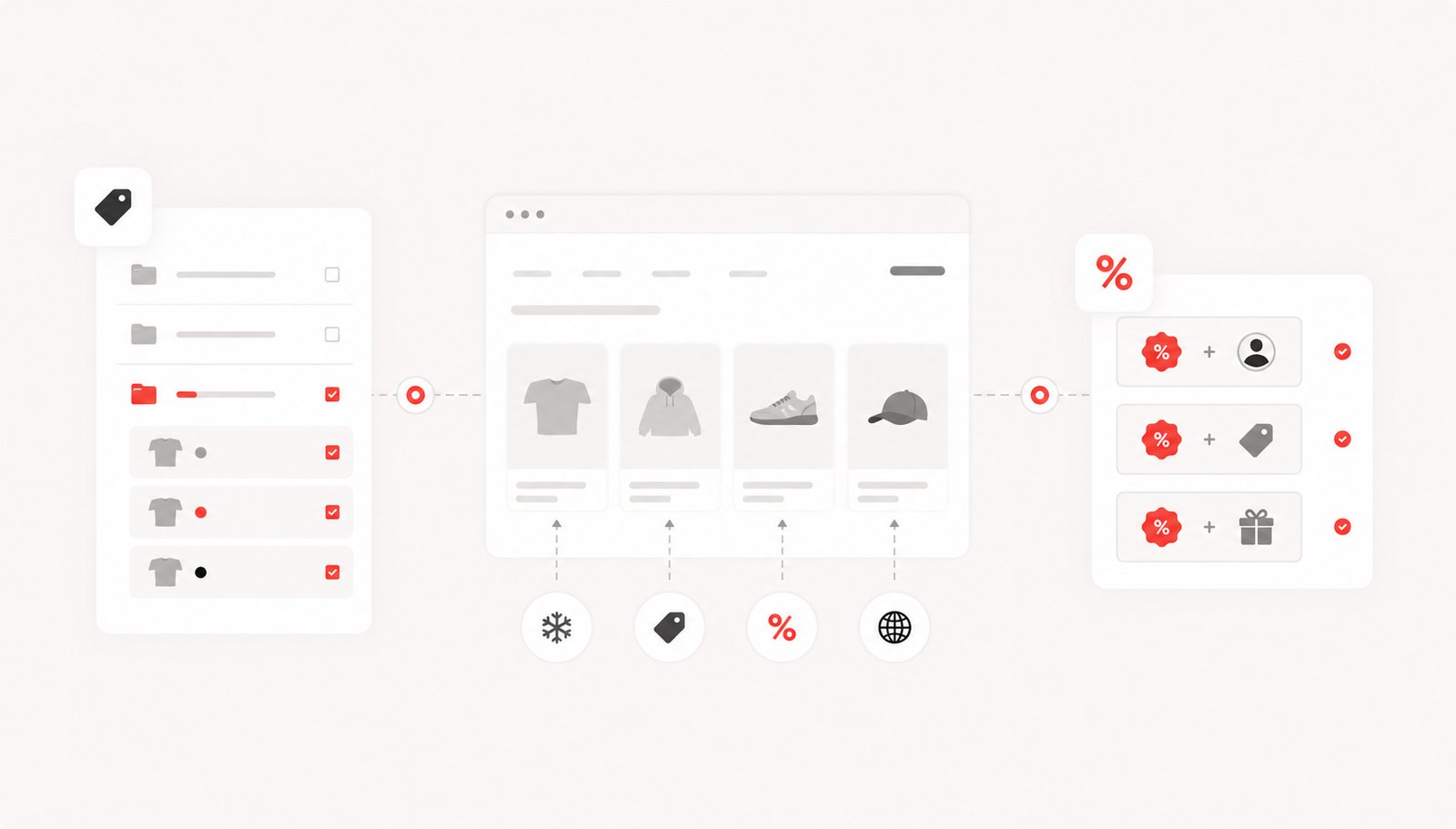
See it in action: Discover how Makro restructured a complex B2B catalogue around specifications, sizes, materials, applications and colour families for our client NewPro Containers. Simplifying product discovery for NewPro’s complex B2B catalogue.
What’s new in marketing and analytics?
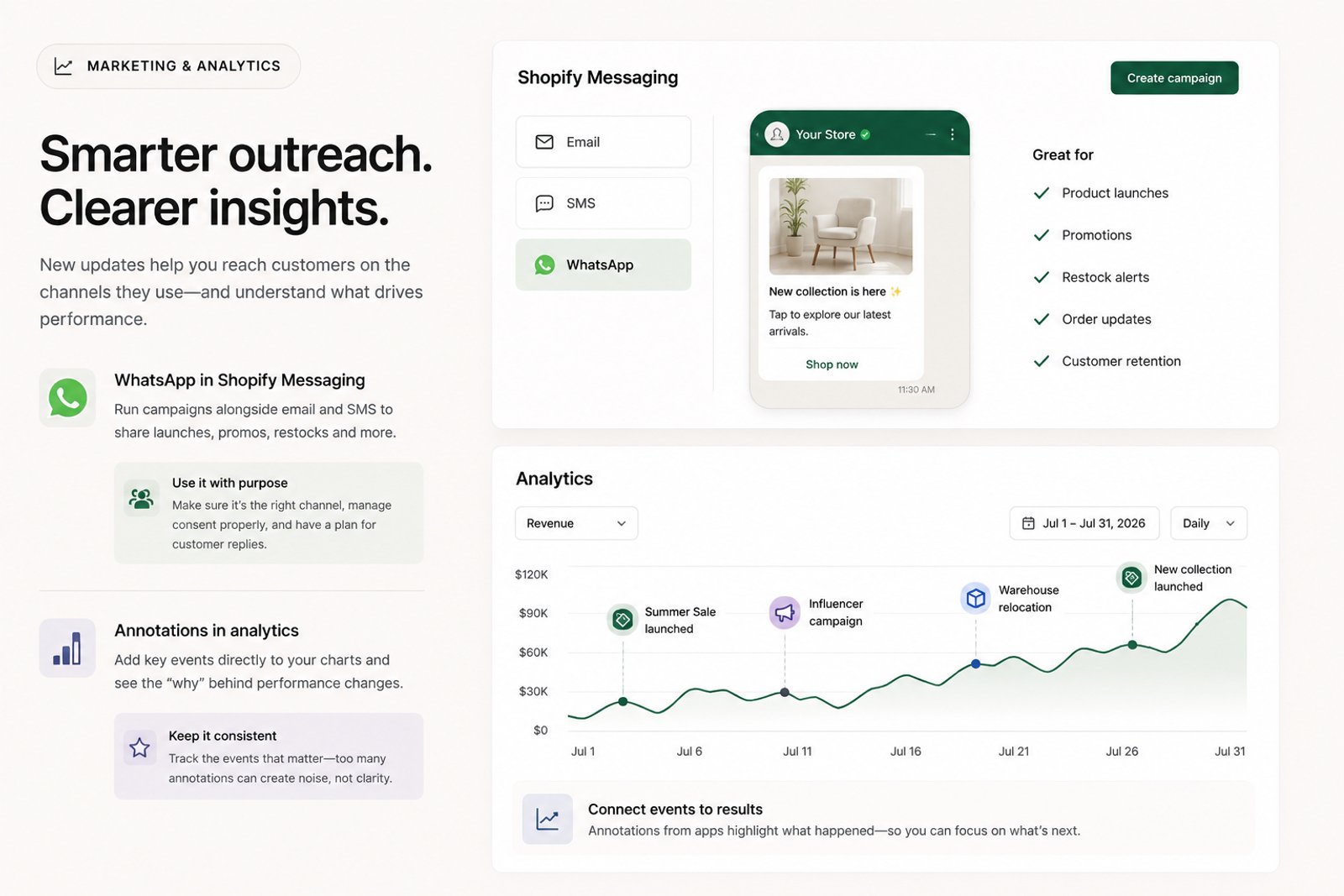
Shopify Messaging now supports WhatsApp campaigns alongside email and SMS.
For merchants whose customers actively use WhatsApp, this creates another channel for launches, promotions, restock messages and retention campaigns.
The value will depend heavily on the audience. A new channel should not simply receive the same message already being sent through email and SMS. Merchants should define what belongs on WhatsApp, how consent will be managed and who will respond when customers reply.
Shopify apps can also add annotations directly to analytics charts. Campaign launches, fulfillment changes, promotions and other milestones can now appear alongside changes in store performance.
This could make reporting more useful, especially for teams that currently compare analytics against separate marketing calendars and project trackers. The key is consistency. If every small change becomes an annotation, the chart will quickly become another source of noise.
What’s new in returns, workflows and store administration?
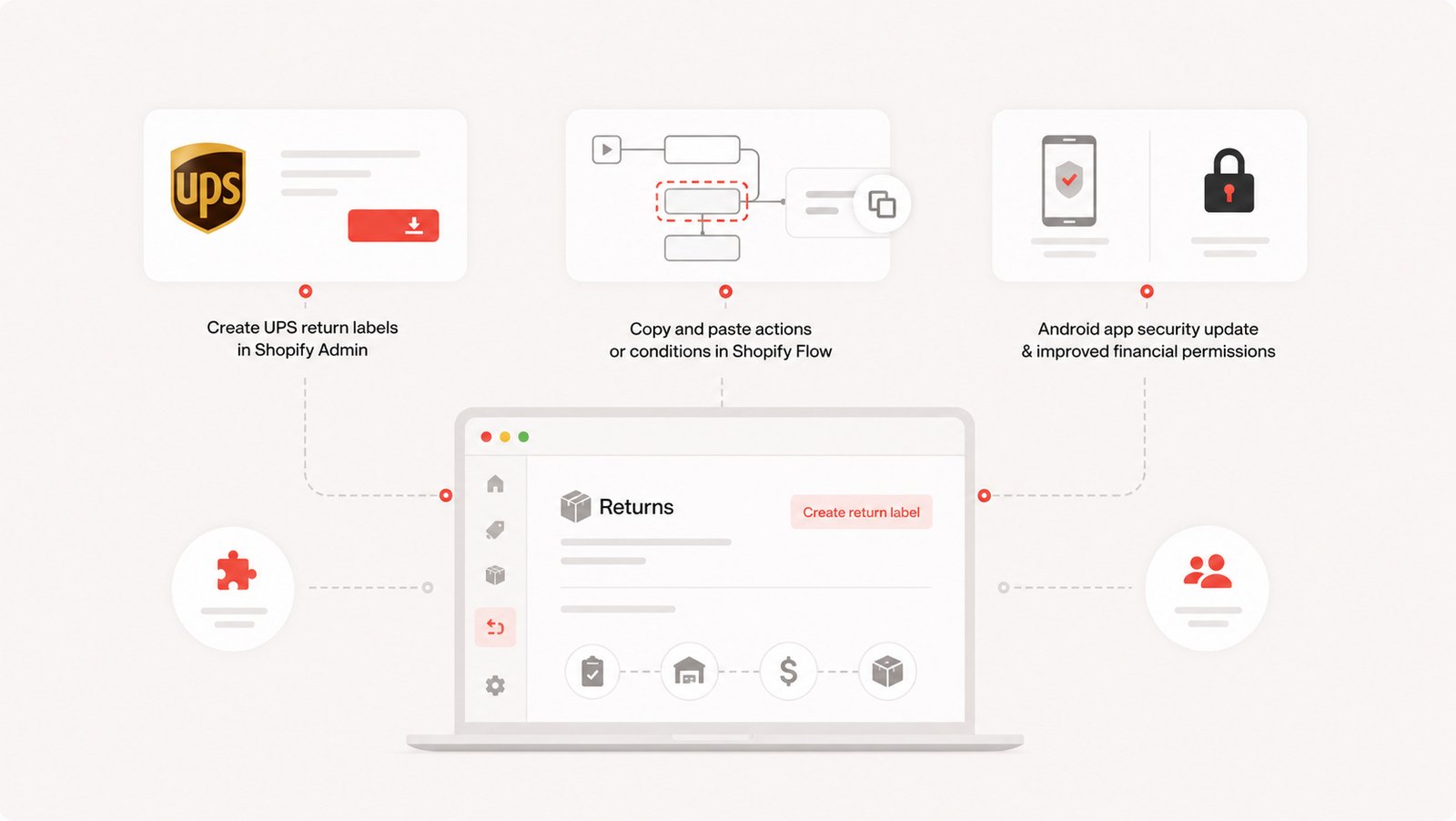
US merchants can now create UPS return labels for domestic orders directly from Shopify Admin.
Shopify Flow users can copy and paste configured actions or conditions within a workflow or between different workflows.
Shopify also released a proactive Android mobile-app security update and improved the financial permissions available to staff.
These updates are largely operational, but that does not make them unimportant.
Creating a return label more quickly will not fix a fragmented return process if approvals, warehouse intake, refunds and inventory updates still happen in disconnected systems.
The same applies to Shopify Flow. Copying a workflow step can save time, but it also copies the assumptions, fields and conditions inside that step. Teams should confirm that any reused automation is still appropriate for the new store, market or process.
See it in action: For our client, Fumex, discover we solved user journeys complexities by connecting Shopify Plus with Sage 100 and supporting direct purchases, recurring subscriptions and quote-based journeys through one commerce platform.
What should merchants prioritize?
The most important July update will depend on where friction currently exists in the business.
International merchants should review pricing, payouts, localization, returns and search configuration as one connected experience.
Retailers should test the new POS functionality in real store conditions before rolling it out across locations.
Merchants with complex catalogues or promotions should determine whether the new collection and discount capabilities can replace existing workarounds without creating new risks.
Larger teams should use the permissions, workflow and security updates as a reason to review who has access to sensitive parts of the store.
The goal is not to activate every new Shopify feature. It is to identify which changes can simplify the operation, improve the customer experience or better support the next stage of growth.
Built once, built to scale.