
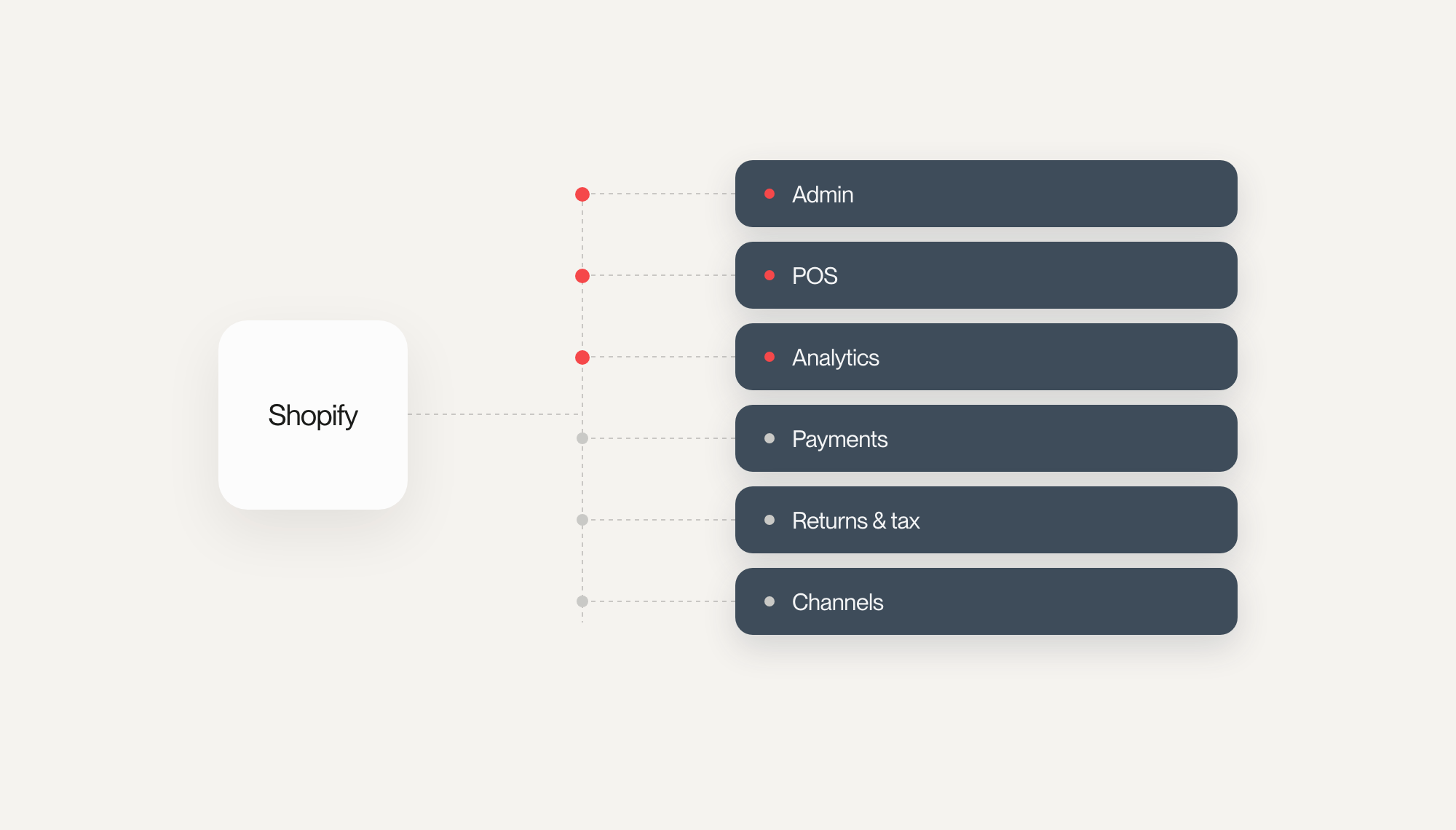
Shopify in September updated: US merchants using Shopify Tax. POS for Retail operators. Category metafields in Analytics.
Makro's Monthly Shopify Recap: September 2026 Updates
Shopify Plus Premier Partner
September was a month of interface and instrumentation rather than new commerce primitives. The admin was restyled, Rollouts gained controls that make a launch legible before it ships, and Analytics learned to report on the fields merchants already use to describe their own catalogues. Six separate changes landed in POS.
Underneath the surface work a pattern holds. Shopify is making the operational layer of the platform easier to see into, and that changes what is worth building outside it. For merchants running anything more complex than a single-location DTC store, the useful question this month is not which feature to turn on. It is which of your existing workarounds the platform has just made unnecessary.
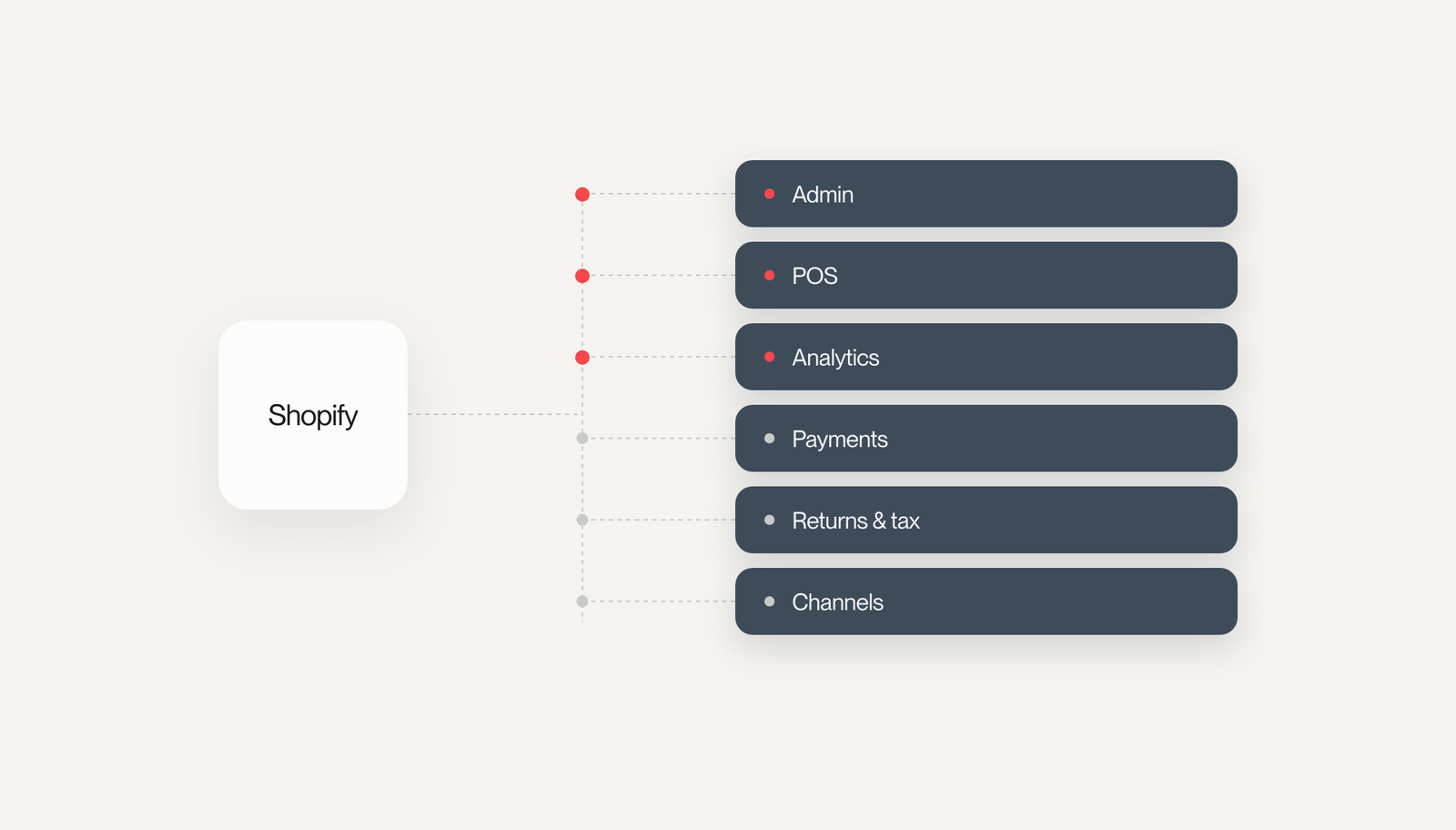
What's new in the Shopify admin?
A new look for the admin·15 September
Shopify restyled the admin with a new frame, colours, type, spacing and icons. Navigation is now collapsible, which returns horizontal room to the working area, and Sidekick has moved to the bottom of every page.
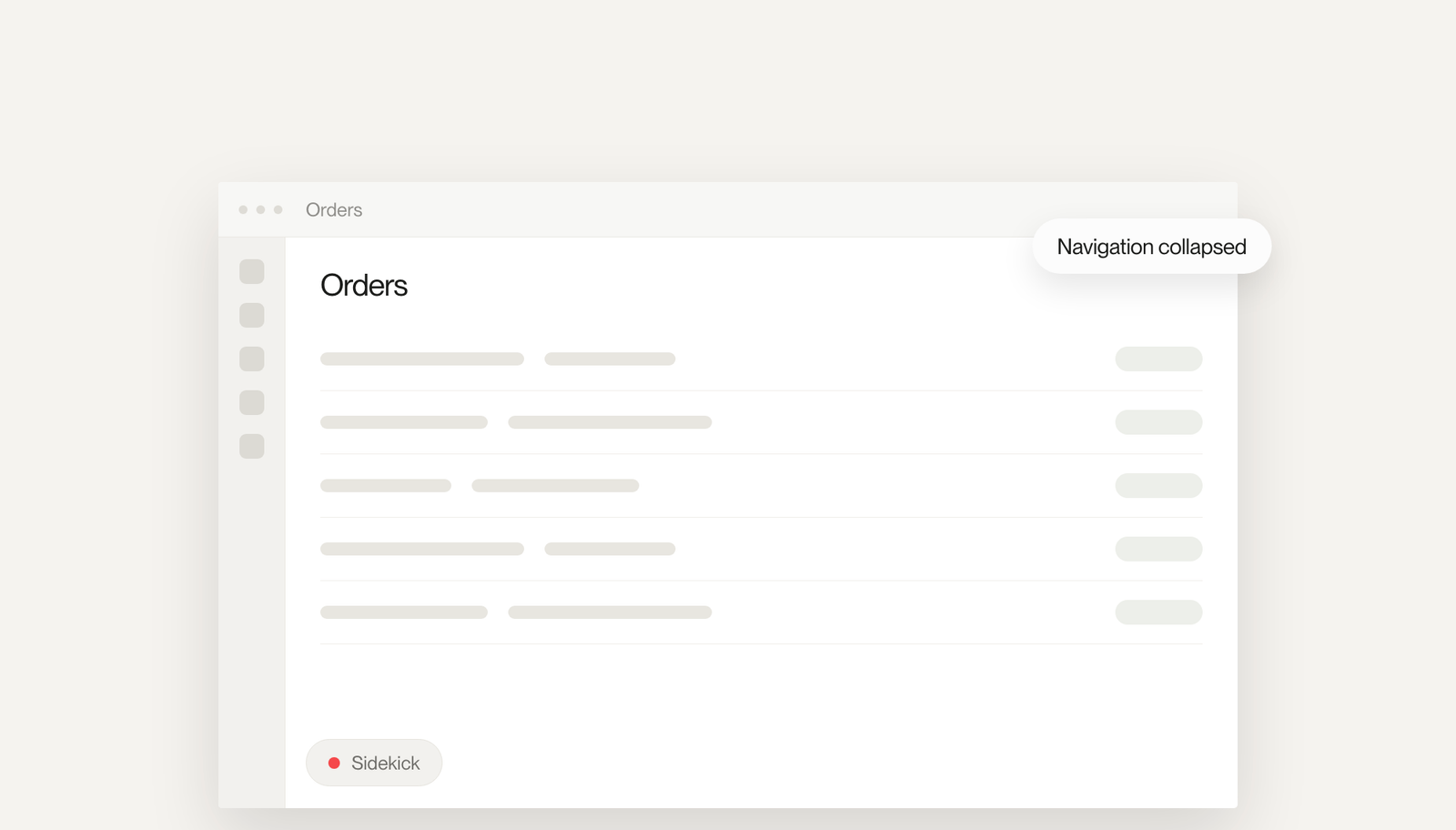
Why it matters. A visual refresh is easy to dismiss, but collapsible navigation and a consistent Sidekick position change how staff move through the admin all day. If you maintain internal documentation, training material or recorded onboarding for merchandisers and support staff, those assets now describe an interface that no longer exists. Budget the time to re-capture them before the next hiring cycle rather than after it.
Clearer and more granular controls in Rollouts·22 September
Rollouts now states intent explicitly, makes it easier to combine several changes into a single rollout, gives insight into the target audience, and identifies conflicts before scheduling.
Why it matters. Conflict detection is the substantive part. Most launch incidents on a large store are not caused by a bad change. They are caused by two reasonable changes shipping into the same window. Seeing that collision before scheduling moves a whole class of risk from post-mortem to pre-flight. Teams running seasonal launches across multiple markets should treat Rollouts as a release tool now, not a convenience.
Shop has moved to shop.com·29 September
Shop's web experience has moved from shop.app to shop.com.
Why it matters. A domain change is an analytics and attribution change. Any referral report, allow-list, content security policy entry, affiliate rule or internal dashboard that matches on shop.app will stop matching. The traffic has not gone anywhere, but it will look like it has if your reporting still expects the old host. Audit those references now.
What's new for Shopify POS and retail operations?
Six POS changes landed in September, which made it the busiest surface of the month.
- Local delivery orders can be created and fulfilled directly in POS (28 September)
- Cycle counts and full stock counts can be planned in Admin and completed by staff in POS (28 September)
- A persistent cart button keeps contents and totals visible on phones, with the full cart one tap away (14 September)
- Staff can see items from an identified customer's abandoned online checkout (3 September)
- Any barcode associated with a variant can be scanned or searched to find it (1 September)
- Connectivity status is visible on POS Home, so staff can confirm a device is ready to sell (1 September)
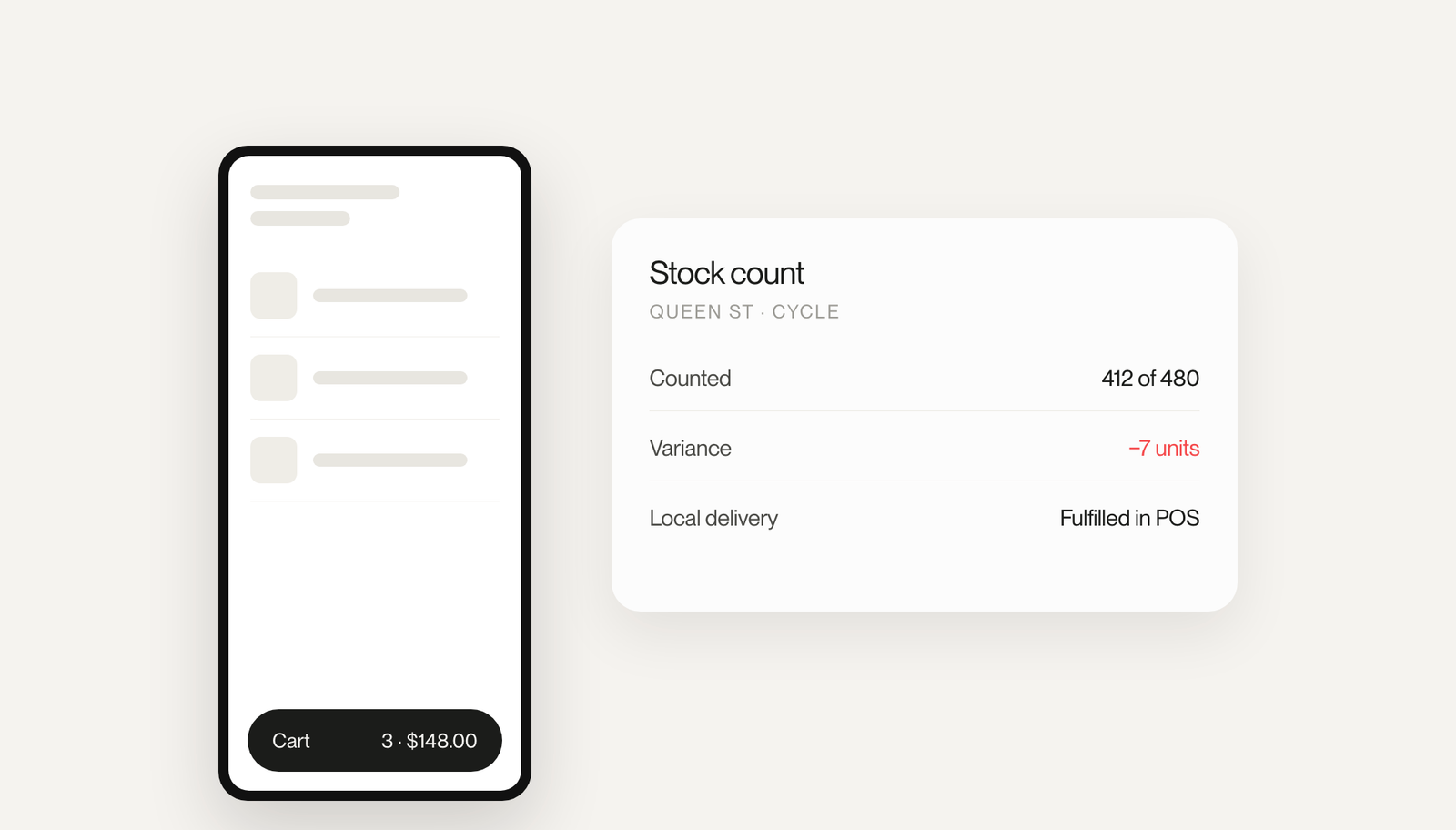
Why it matters. Taken individually these read as polish. Taken together they describe a POS that assumes the store is doing more than ringing up walk-in sales. Local delivery and the visible online cart both move revenue that started online into the hands of store staff, which is the part of omnichannel most merchants describe as a goal and few have actually instrumented.
The stock count change is the operational one. Planning counts centrally and executing them on the floor is how inventory accuracy stops depending on whoever happens to be working that evening. Paired with multi-barcode scanning, a count is no longer defeated by a supplier using its own code.
What's new in analytics and reporting?
Metaobject and category metafields in Analytics·28 September
Reports can now be grouped and filtered by metaobject fields referenced by metafields on products, variants, customers or orders. Separately, reports can be grouped and filtered by category metafields such as colour, material and fit. Products that were already categorized carry those attributes into Analytics automatically.
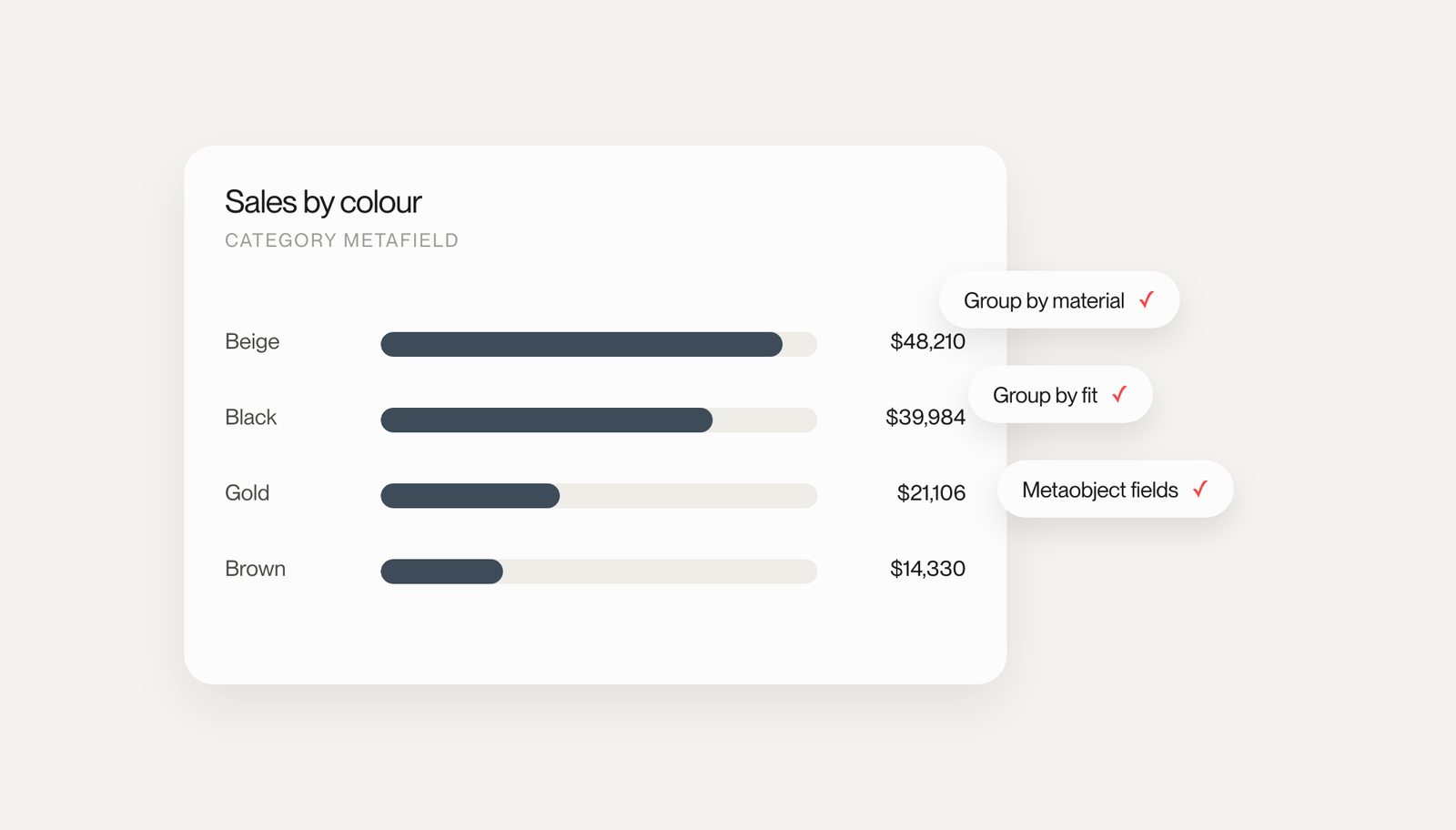
Why it matters. This is the most consequential analytics change Shopify has shipped this year for merchants with real catalogue depth. Reporting on your own product taxonomy previously meant exporting and joining elsewhere. Doing it natively closes a gap that sent a lot of merchants to external business intelligence tools for questions that were never really BI questions.
There is a precondition. These reports are only as good as the categorization underneath them. If products were never properly categorized, or if the team has been using tags as an informal taxonomy, the new grouping will produce confident-looking reports built on inconsistent data. Audit the taxonomy before the first report circulates.
Shipping and duty data, and session measurement·23 and 21 September
Shipping and duty data in Analytics now refreshes more frequently and gives a more complete view of costs. Separately, Shopify has improved how sessions are measured to reflect real shopper activity, and notes that sessions and related metrics may look different after the update.
Why it matters. The session change needs flagging to anyone who reports on traffic. Sessions and every metric derived from them, conversion rate included, will shift. That shift is a measurement correction rather than a performance change, but it lands in the same dashboards your board reads. Annotate the date so the step change is explained before it is questioned.
“What new Shopify feature should we turn on?”
“Which of our existing workarounds has the platform just made unnecessary?”
What's new in payments and payouts?
Three changes landed across payments this month:
- The Payouts page in the admin has a new layout showing every payout in one view (16 September)
- Multi-currency payouts reached Australia and France, where eligible merchants can be paid in 13 and 18 currencies respectively (11 September)
- Shop Pay Installments can be enabled for any entity in supported countries (22 September)
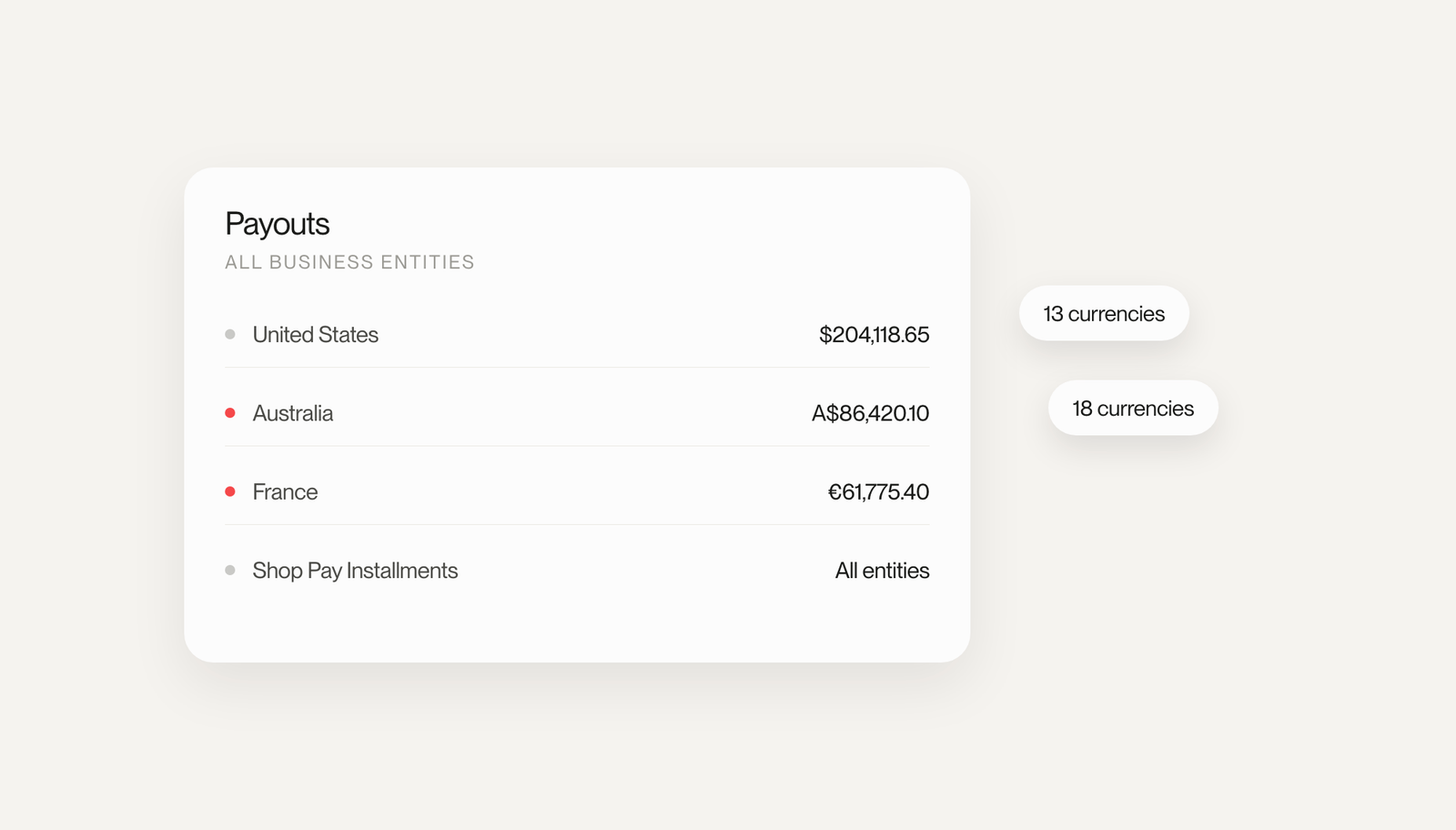
Why it matters. These matter in proportion to how many legal entities you operate. A single-entity merchant gets a tidier payouts view. A group running separate entities per market gets something more useful: the same checkout financing across all of them, and local-currency payouts in two more markets without routing through a conversion.
Finance teams should re-run a month-end close against the new Payouts page before trusting it, particularly where reconciliation is scripted against the previous layout.
What's changing for returns and tax?
Return window overrides·29 September
Return windows can now be overridden for specific collections, products or variants.
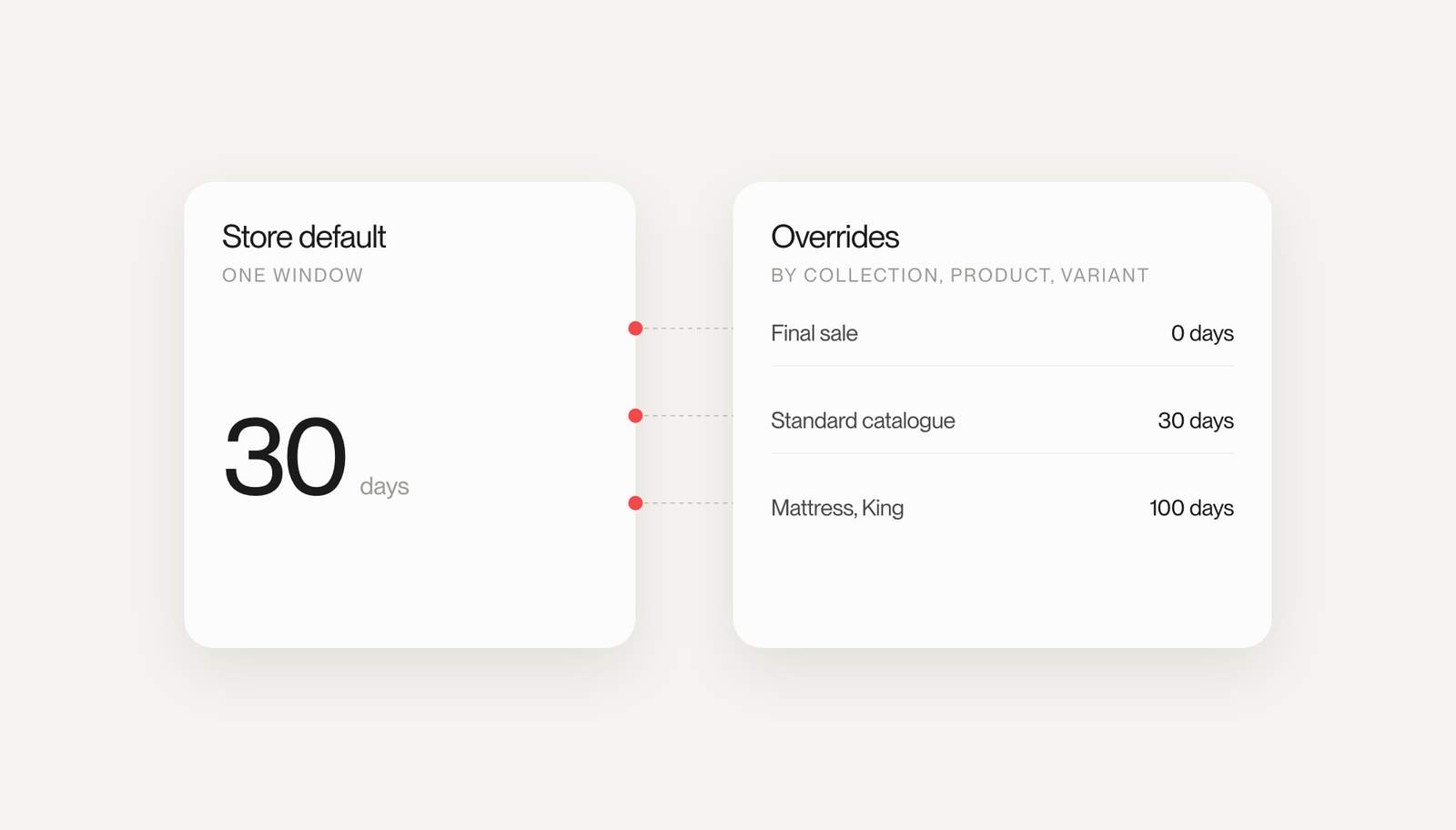
Why it matters. A single store-wide return window has always been a compromise. Final sale items, perishables, made-to-order furniture and high-value electronics do not share a sensible policy. Overrides let the policy follow the product, which reduces both the returns you should never have accepted and the manual exceptions your support team was quietly granting anyway. Model the overrides against your actual return rate by category before setting them.
Tax on return shipping fees·from 23 October 2026
Shopify Tax and Tax Platform will automatically tax return shipping fees in the United States in the same way as other shipping charges.
Why it matters. This is the only item this month with a date attached, and that date falls after this recap publishes. If you charge for return shipping in the US, your net recovery per return changes on 23 October. That is a small number on a single return and a material one across a year. Model it now, decide whether the fee absorbs the tax or the customer does, and brief support before the first customer asks why the number moved.
What's new in checkout and marketing channels?
WhatsApp marketing consent at checkout·10 September
Merchants can capture WhatsApp marketing opt-ins when customers make a purchase, then send targeted campaigns on the channel.
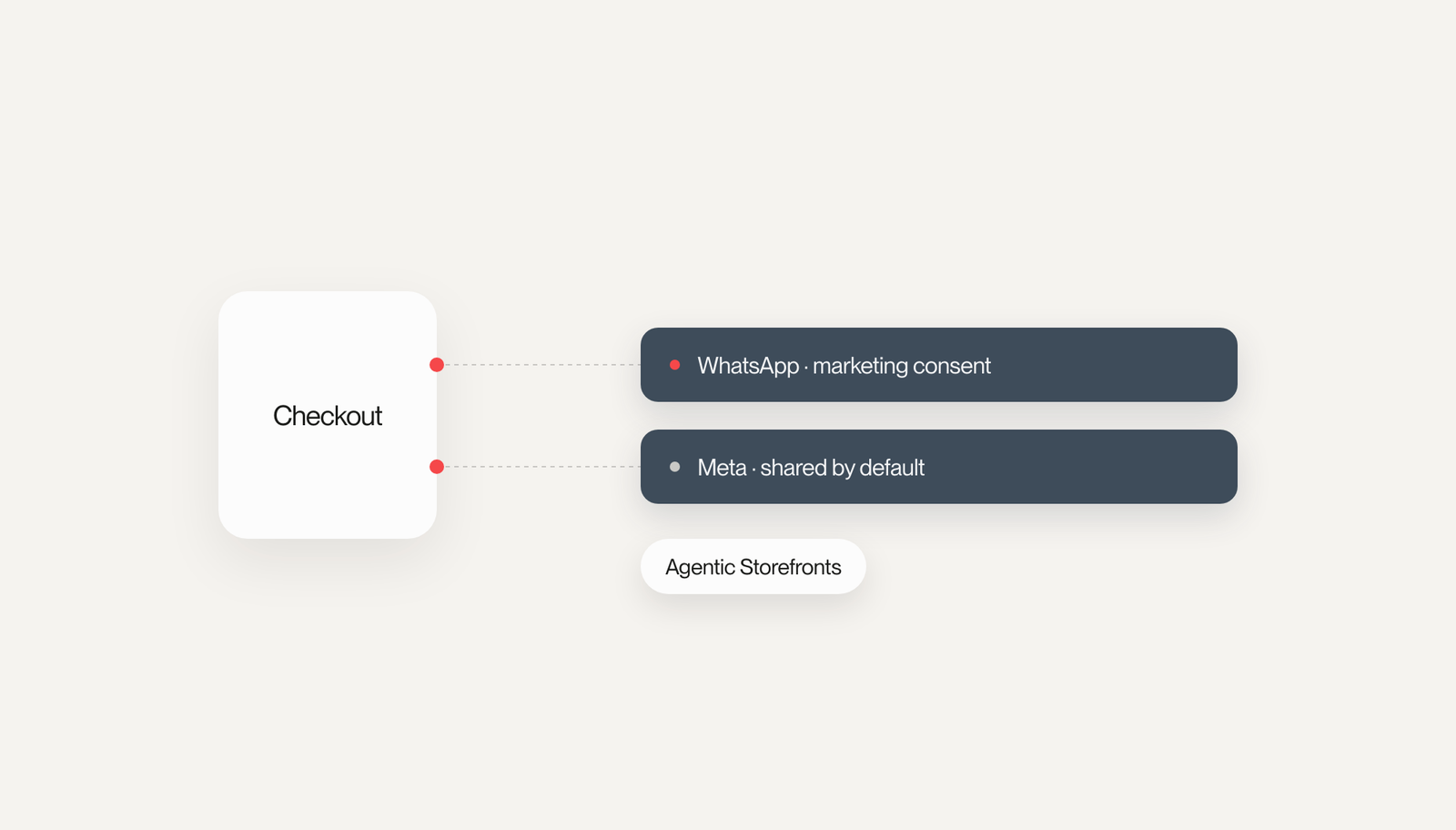
Why it matters. Shopify brought WhatsApp consent to Forms in August and has now brought it to checkout, which is where consent rates are highest. The constraint is not collection. It is what the channel carries. WhatsApp has far higher open rates than email and far lower tolerance for broadcast. Decide what the channel is for, how it sits beside email and SMS, and who answers when a customer replies, before you start collecting.
Meta is now an AI channel·8 September
Meta appears alongside your other AI channels under Agentic Storefronts in the admin. Products are shared with Meta by default through Shopify Catalog.
Why it matters. Note the default. Your catalogue is shared unless you decide otherwise. For most merchants that is a distribution gain. For merchants with selective distribution agreements, minimum advertised price policies or region-locked products, it is a question to answer deliberately rather than inherit. Check what is being shared before someone else does.
What's new for product data and developers?
Variants support multiple barcodes·8 September
A variant can now store up to 20 barcodes, each with an optional type such as GTIN, UPC or EAN, so every code a supplier or marketplace uses finds the same product.
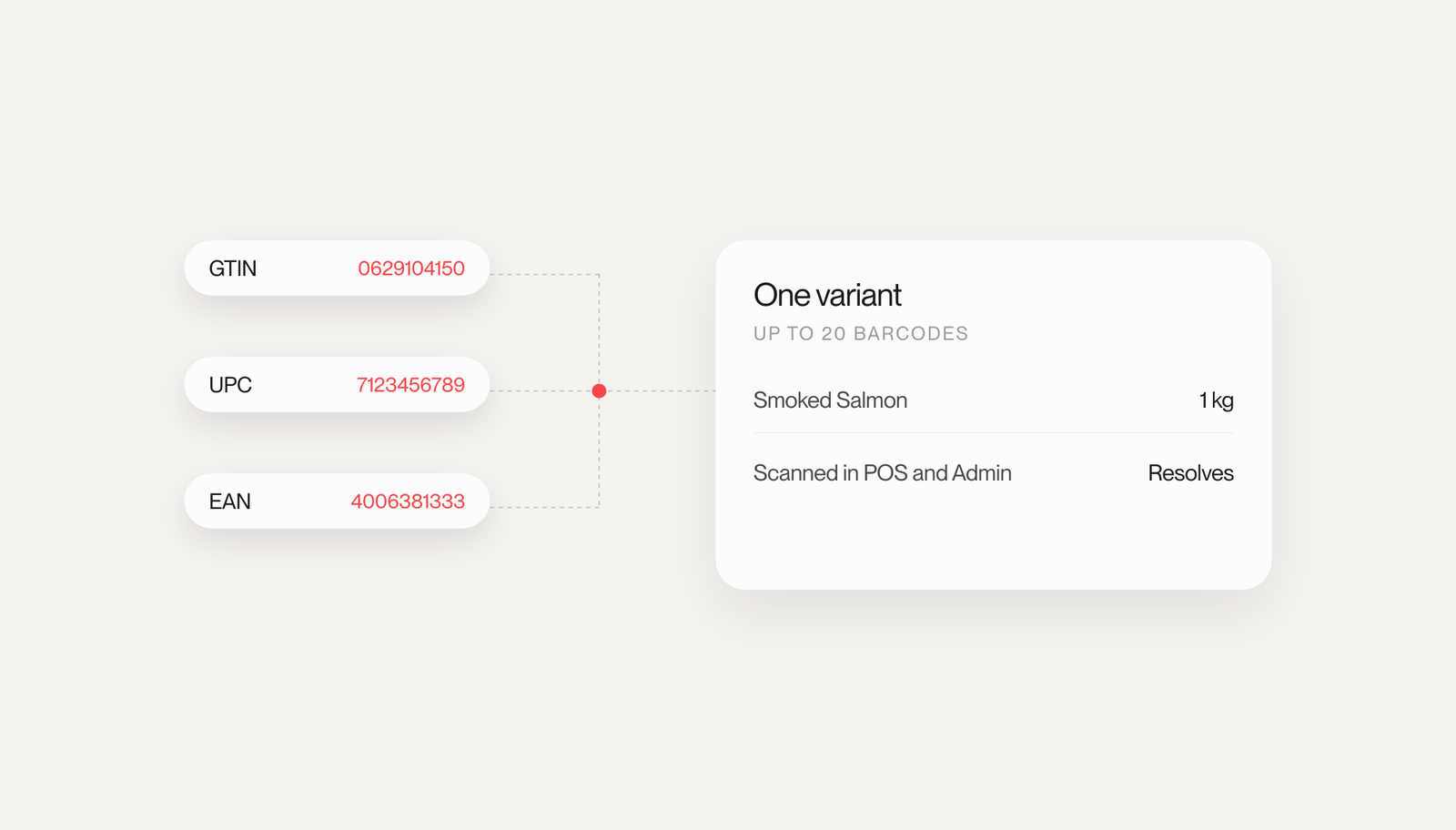
Why it matters. This removes one of the most common reasons merchants built custom metafield structures. A product that arrives from two suppliers under two codes, or sells on a marketplace that mandates its own identifier, previously needed either duplicate variants or a bespoke lookup layer. Twenty typed barcodes on one variant means every partner code resolves to the same product. If you built that lookup yourself, this is a chance to retire it.
Filterable logs and health metrics for custom apps·25 September
The Developer Dashboard now shows how custom apps perform: API request volume, error rates, webhook health, and one filterable log stream of every request made to Shopify.
Why it matters. This is the quietest update of the month and the one most likely to change how a team operates. Webhook health in particular has been the blind spot in most Shopify integrations. A webhook that silently stops delivering looks identical to a quiet period until the reconciliation report disagrees. Putting request volume, error rates and delivery health in one place turns a class of silent failure into something observable. Open it before you need it, so you know what normal looks like.
What do September's Shopify updates tell us?
September was an instrumentation month. What shipped instead was visibility: into your own apps, into your own catalogue taxonomy, into launch conflicts before they happen, into whether a POS device is actually online.
That pattern has a direction. Shopify is steadily absorbing the operational scaffolding that merchants and their partners used to build and maintain themselves. Multi-barcode support retires a custom lookup. Developer Dashboard logs retire a monitoring layer. Category metafields in Analytics retire an export-and-join. Each one is small. Together they move the boundary between what the platform does and what is worth building around it.
The strategic reading is not that custom development matters less. It is that it should sit further up the stack. Work that exists to compensate for missing visibility is now a maintenance liability. Work that encodes something specific to your business, your pricing logic, your ERP contract, your buyer workflow, is where the return is.
What should merchants prioritize?
The right September update depends on where complexity currently sits in your business.
US merchants using Shopify Tax. The 23 October return shipping fee change has a date. Model the impact on net recovery per return, decide whether the fee or the customer absorbs the tax, and brief support before it lands.
Retail operators. Six POS changes is a lot to absorb at once. Start with stock counts, because planning centrally and executing on the floor is the one that moves inventory accuracy. Pair it with multi-barcode scanning so counts are not defeated by supplier codes.
Merchandising and analytics teams. Category metafields in Analytics are only as reliable as your categorization. Audit the taxonomy before the first report circulates, and annotate the 21 September session measurement change in any dashboard a non-analyst reads.
Finance teams. Re-run a month-end close against the redesigned Payouts page before trusting it, especially where reconciliation is scripted. Groups operating multiple entities should review whether the new multi-currency markets and cross-entity Installments change the routing.
Teams running custom apps. Open the Developer Dashboard log stream now, while nothing is wrong. Establish what normal request volume and webhook health look like, so an incident has a baseline to compare against.
Anyone with a selective distribution model. Check what Shopify Catalog is sharing with Meta by default and decide whether that matches your agreements.
Have a project in mind?
Makro is a Shopify Plus Premier Partner. We replatform brands onto Shopify Plus, build DTC and B2B storefronts, and connect commerce to ERP with one senior in-house team from discovery to launch.